
Popeyes Louisiana Kitchen — Tenant Representation
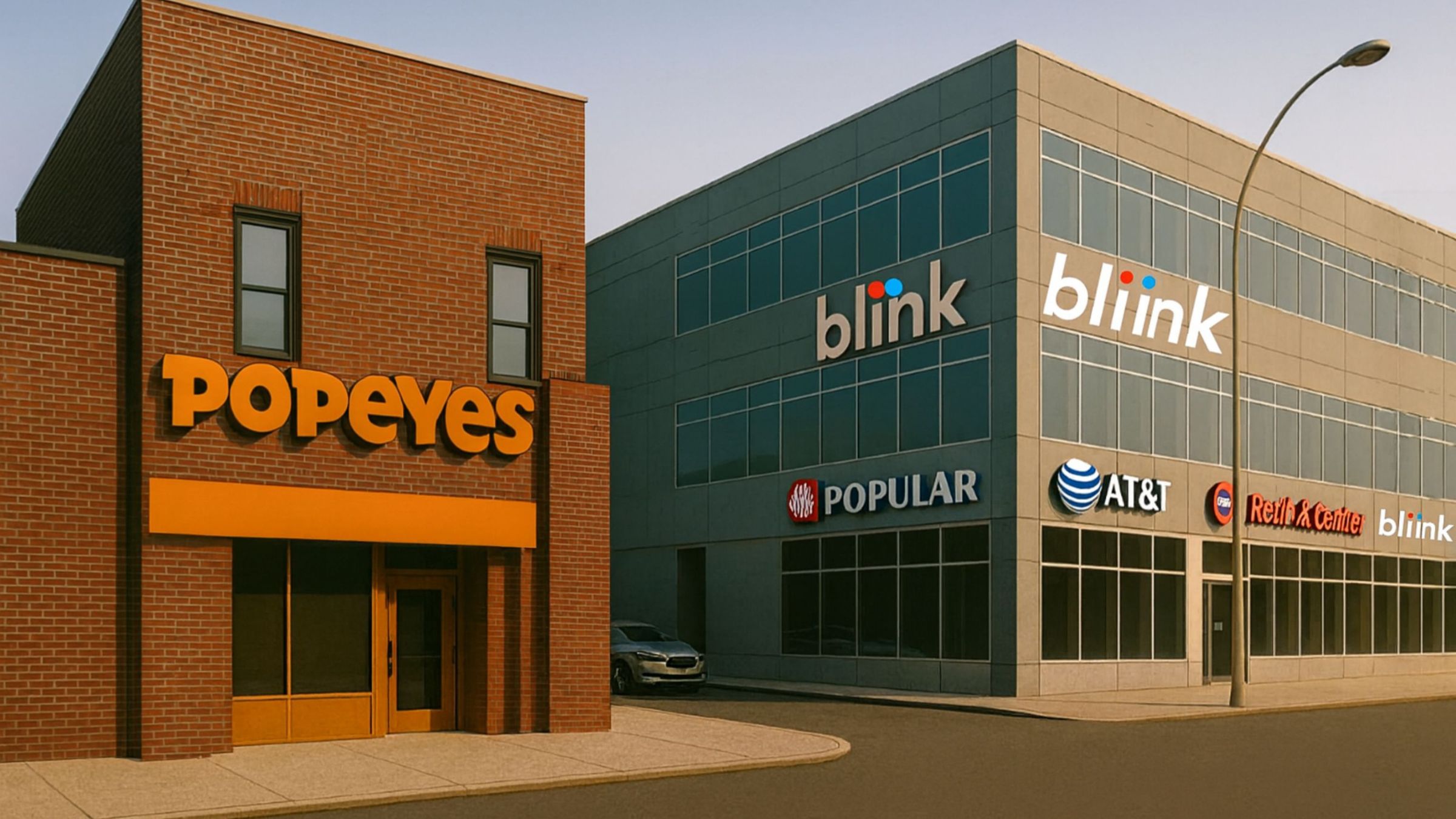
Engagement Overview — What It Is
Retained by an experienced Popeyes Louisiana Kitchen franchisee to execute a disciplined market expansion across 4 NYC boroughs, targeting mixed-use assets, high-density street retail, and select shopping centers within tightly defined micro-trade areas. The mandate was to deliver market entry and expansion strategy through full lease execution, anchored to occupancy-cost discipline, trade-area fit, and scalable store replication.
Result: Secured 5 prime locations after pre-deal due diligence on 134 retail sites across 25 target areas, ensuring each selection advanced portfolio quality, operational feasibility, and brand-right presence.
Brand Objectives — Why It Mattered
The franchisee engaged Cornerstone to:
- Open proprietary access to off-market availability and direct landlord decision makers
- Convert fragmented market data into clear, comparative rent and term benchmarks
- Enforce leasing discipline within micro-trade areas of 5–10 blocks
- Maintain standardized store layout, minimum SF, and branding specifications set by the parent company
- Protect occupancy-cost ratios while accelerating market-entry and expansion pacing
The core requirement was a tenant-side advisory partner that could harvest nonpublic intelligence, sequence targets to avoid proximity conflicts with existing units, and preserve negotiation leverage in a constrained supply environment where most public listings were already known.
Market Realities — What We Were Solving For
Trade-Area Constraints
- Concentrate new stores within tightly defined micro-trade areas without cannibalizing existing locations
- Requirement to validate each node using mobile-data mobility patterns, daytime population, and demand drivers
- High competition for F&B space in corridors anchored by transit, office, hotel, university, and hospital traffic
Operational Constraints
- Minimum rentable and usable SF, with layouts compatible with Popeyes’ standardized urban store format
- Operational feasibility screens for venting, shafting, MEP capacity, loading, and signage paths
- Need to advance only those sites that passed preliminary test-fits and build-out feasibility review
Risk Profile
- Exceeding target occupancy-cost ratios in high-exposure corridors
- Underestimating delivery risk, construction scope, and hidden landlord conditions impacting build-out cost
- Committing to locations without clear white-space advantage versus direct competitors and substitutes
Market & Site Strategy — How We Solved It
Applied the full institutional tenant-side framework across Brand Discovery, Market Planning, Site Identification, and Touring/Due Diligence:
- Structured trade-area planning using mobile-data patterns, demographics, daytime density, and mapping of key demand drivers
- Executed competitive mapping to isolate white-space, evaluate rival formats, and benchmark rents and performance
- Advanced only those sites that cleared rent-to-revenue modeling, occupancy-cost testing, and preliminary test-fits
- Prioritized locations based on minimum SF, frontage visibility, pedestrian density, and placement within target area
- Built a pipeline via full-market scans and block-by-block canvassing to surface shadow vacancies and off-market options
- Used a weighted scorecard to shortlist the top 1–3 LOI candidates per node and inform internal leadership decision memos
This process produced a rigorously filtered set of viable locations, each aligned with budget, operational feasibility, and brand standards before entering negotiation.
Execution & Negotiation — What We Did
Controlled the transaction cadence end-to-end to protect leverage, timeline integrity, and deal quality:
- Structured and led tenant tours with curated tour packages, defined agendas, and disciplined decision sequencing
- Deployed iterative LOI versioning while keeping alternate sites in active play to maintain negotiating leverage
- Negotiated the full economic stack: lease term, security deposit, free rent, TI, rent reductions, escalations, exclusivity, Good Guy Guaranty, landlord work scope, and hours of operation
- Validated feasibility through on-site walk-throughs and preliminary test-fits with design and MEP stakeholders
- Interfaced directly with landlords to secure clean information flow, protect confidentiality, and compress cycle times
The approach ensured no advancement of non-viable sites and aligned final business terms with both financial and operational requirements.
Results — What Happened
- 5 NYC locations secured
- 7,917 SF leased across mixed-use, street retail, and shopping center assets
- All sites aligned with Popeyes’ brand standards, operational criteria, and ROI thresholds
- Occupancy cost reduced versus franchisee pro forma through disciplined rent and term structuring
- Improved visibility, traffic capture, and brand positioning across priority corridors
- Trade-area targeting converted into measurable store-level performance potential and stronger market exposure
Outcome: A multi-location expansion program that balanced occupancy-cost discipline with brand-right urban exposure.
Impact — Why It Worked
The new locations enhanced Popeyes’ market presence and established trade-area exclusivity for the franchisee within key NYC nodes, positioning the brand to capture higher throughput from proven demand drivers.
Key impacts:
- Strengthened neighborhood presence and incremental traffic capture in priority micro-trade areas
- Trade-area exclusivity reinforced through disciplined spacing and targeted corridor selection
- Acceleration of the expansion roadmap with a validated market-entry and scaling sequence
- Creation of a repeatable site-selection and deal-execution model for subsequent rollouts
- Tighter portfolio scalability with preserved occupancy-cost discipline and delivery risk controls
The engagement transformed real estate from ad hoc site sourcing into a structured, institutional tenant-rep platform for ongoing multi-market growth.
Looking to scale high-performance retail expansion?
We help brands secure viable, profitable urban sites using data, discipline, and proprietary sourcing systems.
Speak with Cornerstone