
The Door — Landlord Representation
Assignment Overview — What It Is
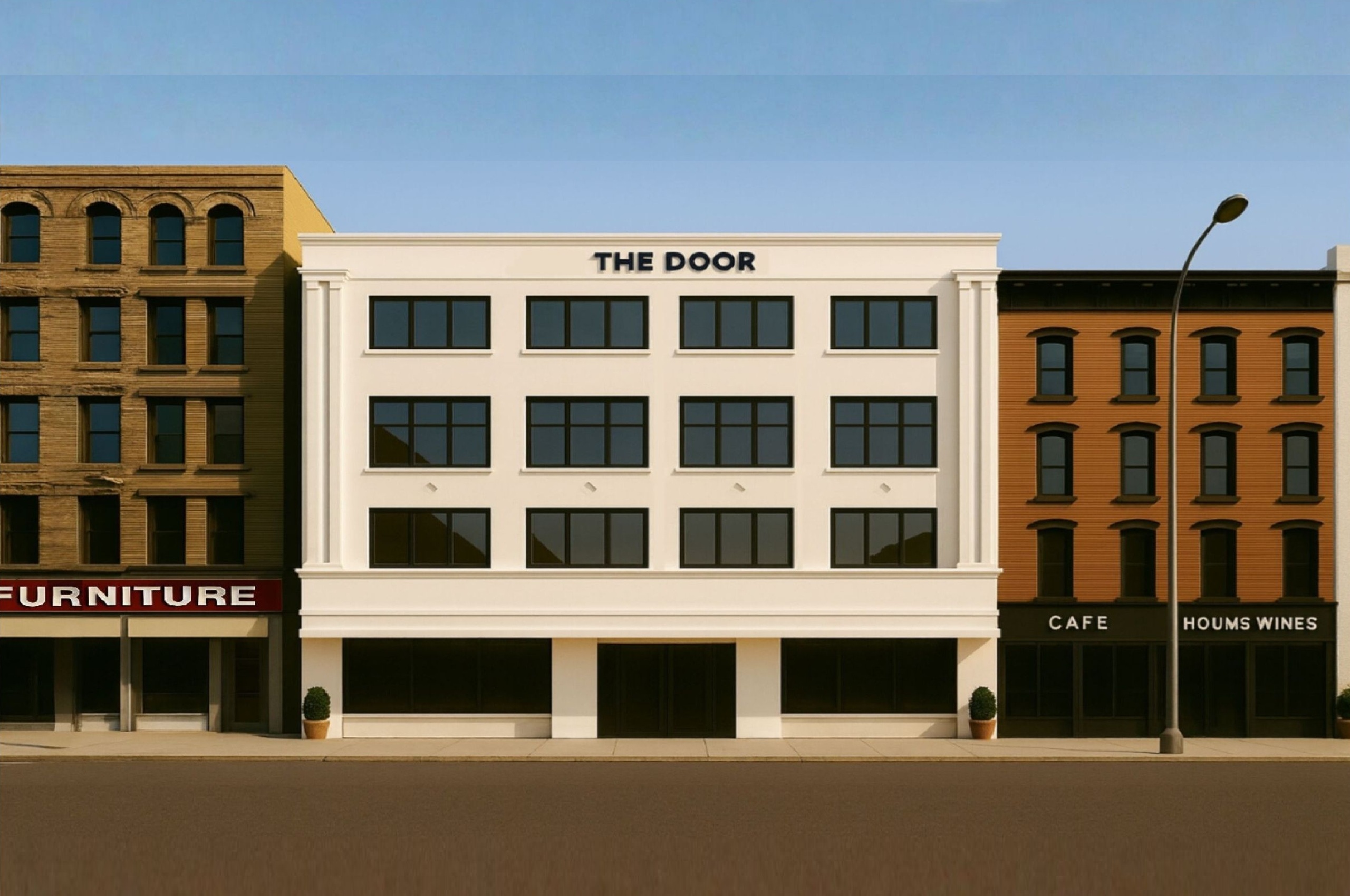
Cornerstone was retained to reposition and lease a four-story, 23,100 SF elevatored commercial building at 2999 Third Avenue in the Bronx, located adjacent to the Hub—one of the borough’s highest-density retail districts. The asset had undergone a complete modernization and was 100% vacant at engagement.
Mandate: Reintroduce the building under a new market narrative and execute a full leasing strategy to stabilize the asset through a credit-worthy, long-term operator.
Result: Secured 18,000 SF with a financially strong, institutionally backed nonprofit within 150 days, transforming a stagnant building into an income-producing asset.
Client Objectives — Why It Mattered
Ownership required institutional leasing leadership to:
- Overcome legacy vacancy perception
- Accelerate absorption and restore income
- Attract credit-quality tenants with operational stability
- Maximize NOI and support future refinancing
- Build a tenant pipeline where none existed
Principal risks included limited awareness of the asset due to historic vacancy, relative transit disadvantages versus competing submarkets, and the need to secure uses that aligned with community demand while still supporting underwriting assumptions.
Market Realities — What We Were Solving For
Trade-Area Constraints
- Competitive mixed-use assets with stronger transit adjacency
- Limited visibility into category saturation and absorption velocity
- High daytime population but fragmented tenant demand patterns
Asset-Level Constraints
- Newly renovated but unproven post-modernization
- Floor plates and infrastructure requiring mission-compatible uses
- White-box delivery needing precise positioning to generate demand
Risk Profile
- Income stagnation
- Extended downtime
- Valuation drag ahead of refinancing
Advisory Strategy — How We Solved It
We deployed a market-validated repositioning framework grounded in analytics and feasibility:
- Defined primary and secondary trade areas; analyzed daytime population, workforce density, and spending power
- Created a curated comp set to benchmark achievable rents, concessions, and lease structures
- Underwrote multiple use categories through rent, TI, and infrastructure feasibility modeling
- Determined highest-and-best use, prioritizing mission-aligned nonprofit and public-service operators offering stable occupancy and strong financial backing
- Developed pricing strategy, merchandising logic, and outbound sequencing to generate immediate demand
- Modeled rent roll outcomes and NOI impact across scenarios to ensure an accretive leasing strategy
The positioning focused on aligning the building’s new infrastructure with tenant categories capable of delivering long-term stability and valuation uplift.
Execution & Management — What We Did
A structured leasing campaign was launched upon rebranding:
- Digital marketing, direct outreach, and targeted broker activation
- Tours supported by engineered collateral highlighting renovations, efficient layouts, and immediate occupancy
- Weekly pipeline reporting to maintain deal cadence
- LOI versioning and structured negotiation to optimize economics and reduce LL TI exposure
- Coordination of architectural test fits, feasibility reviews, and operational requirement validation to accelerate credit approval
This process delivered full lease execution in under 150 days from market launch.
Results — What Happened
- 18,000 SF leased to an institutionally supported nonprofit operator
- Eliminated 100% vacancy and restored stabilized rental income
- Achieved leasing velocity exceeding submarket comparables
- Enhanced building perception in the Hub corridor and validated market competitiveness
- Delivered strong covenants, durable rent profile, and long-term stability
Impact — Why It Worked
The execution materially improved the asset’s financial performance and valuation:
Key impacts included:
- Stabilized rent roll strengthened refinancing terms
- Tenant credit profile reduced risk and increased long-term income durability
- Repositioning transformed the asset into a market-relevant commercial property
- Demonstrated the effectiveness of institutional leasing discipline, proactive outreach, underwriting rigor, and execution precision
The success of the assignment led to further portfolio discussions and reinforced Cornerstone’s role as a trusted advisor for value creation in emerging submarkets.
Looking to replicate results like this?
We help owners convert underperforming assets into predictable, measurable value creation.
Speak with Cornerstone